A studio for serious non-fiction
From the first source to the final folio.
GuruBooks is where a book is researched, written, edited and typeset: your sources and evidence, the manuscript, the editorial process and print-ready files, in one studio — every claim traceable to its page, every decision left to the author.
Manuscripts and sources are private to your workspace.
A historian is a reader who has agreed to be overheard. Every claim she makes is spoken in the presence of the sources, and any reader with patience may walk into the archive behind her and check whether the documents say what she says they say.1
This is the first contract of serious non-fiction, and it is older than the footnote. Bede named the monks who had sent him letters; the chroniclers of the Italian cities copied charters into their pages, so that the reader could judge the evidence for themselves.
A citation is not an ornament. It is a precise promise: that a particular page, in a particular edition, will bear the weight placed on it.
1 In GuruBooks every citation resolves to a page in a document in your library.
The opening spread of a sample book, set by GuruBooks in the Academic Monograph design.
- Private by default
- Every claim to its page
- The author decides
- Checked before release
- Twenty-five designs
Made for the people who make serious books
- Authors
Non-fiction, history, memoir, theology and argument — from the first source to a print-ready file, in one place.
- Scholars
A monograph or thesis turned book, with evidence, citations and page references kept honest throughout.
- Editors
Developmental edit to proofread in a recorded workflow, with tracked changes the author accepts or rejects.
- Presses & institutions
House designs, printer profiles and organisation defaults for a list of titles, with exports checked before release.
Contents
Seven movements take a book from the first source to the final file. Each is a workspace of its own; you can return to any of them at any time, and nothing moves forward without your decision.
Begin with researchI. The Library
Books, papers, scans and notes, read and indexed so a passage can be found by its words or by its meaning. Scanned pages are made searchable.
II. Research
Findings, arguments and counter-arguments drawn from your sources, each tied to the page it came from.
III. Direction
The questions only the author can answer: position, emphasis, voice. Nothing material is settled for you.
IV. Architecture
Parts, chapters and sections, approved by you before a single chapter is drafted.
V. Writing
A manuscript editor with tracked changes and word-level revision; shared editing merges, never overwrites.
VI. Review
Editorial reports, continuity across chapters, and citations checked against the sources they cite.
VII. Production
Print-ready PDF, EPUB and DOCX in a design of your choosing, with a cover built to the printer’s sheet.
“A citation is not an ornament. It is a precise promise: that a particular page, in a particular edition, will bear the weight placed on it.”
Every claim, to its page.
Your library is read and indexed, analysed across sources, and turned into evidence: each claim recorded with the passage that supports, opposes or qualifies it, how confident you are, and whether you have checked it — then followed into the chapters that use it.
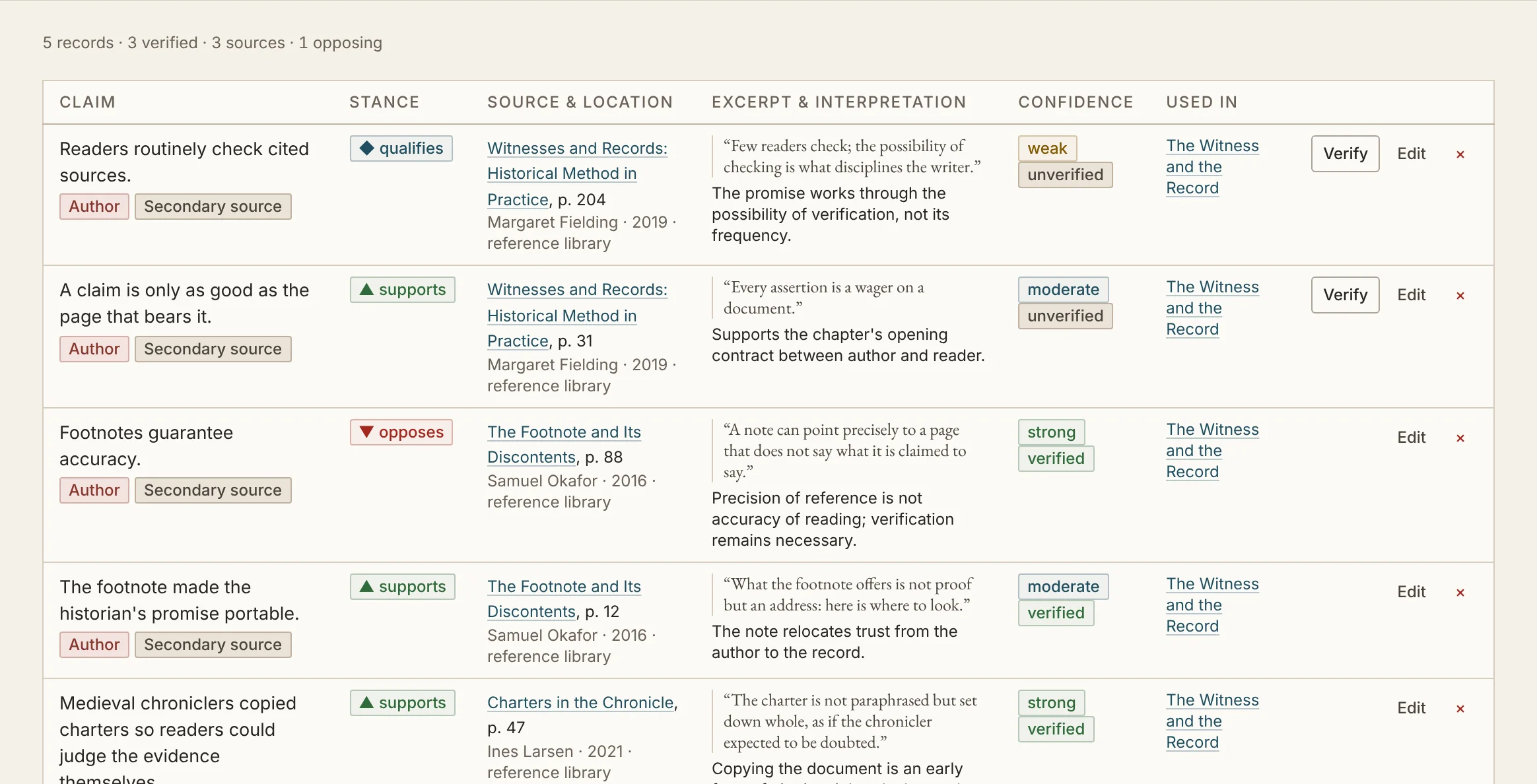
Plate I. Evidence records. Claims, the pages that bear them, and whether each has been verified. Sample book; sources are fictional.
Where the writing is done, and answered for.
A manuscript editor built for long-form work: tracked changes and word-level revision, notes and threads, chapter plans and research beside the text, versions and branches. AI drafts and revisions arrive as proposals; nothing changes the manuscript until you accept it.
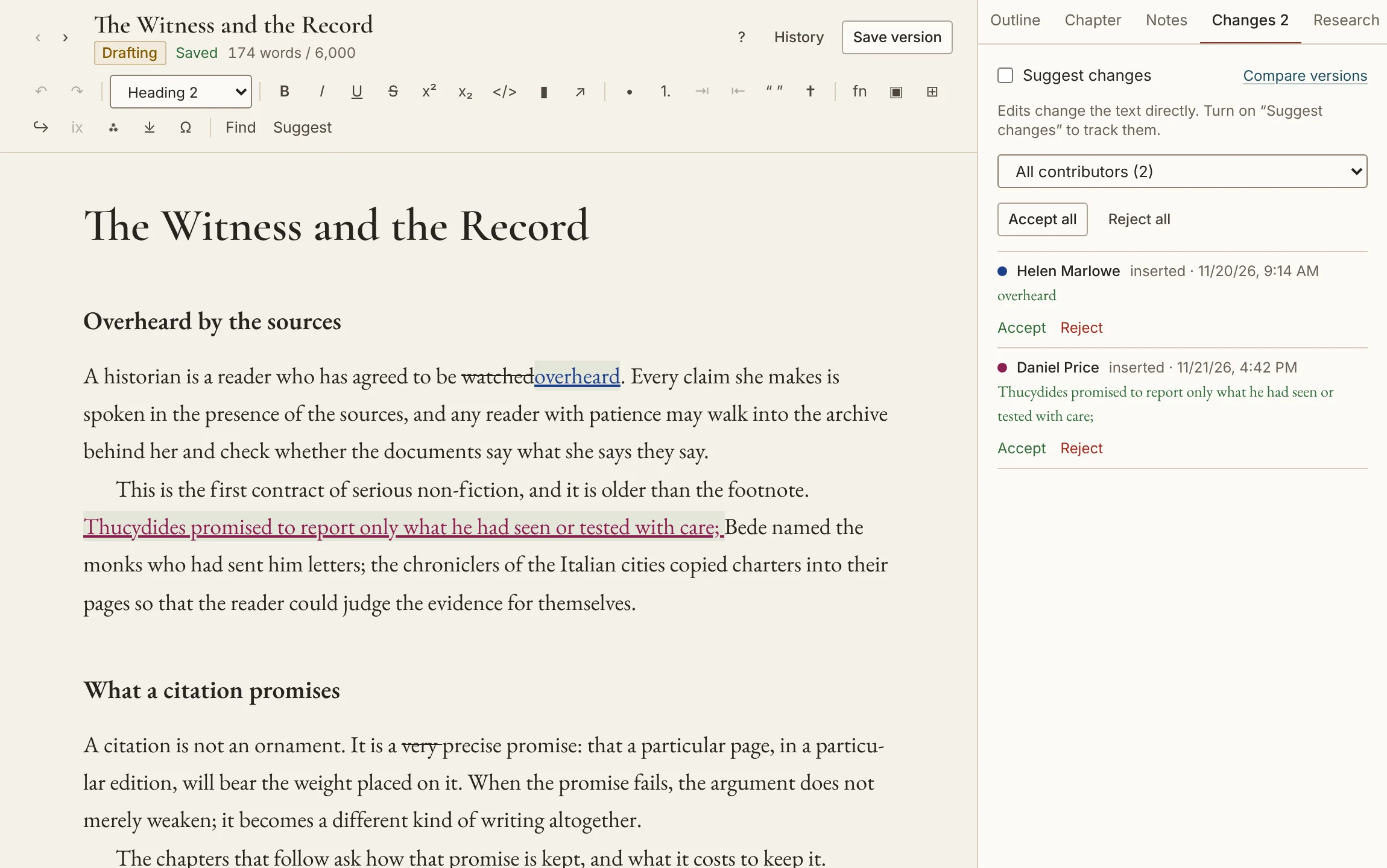
Plate II. The manuscript editor. An author’s revision and a copy-editor’s insertion stand as tracked changes until the author decides. Sample text; contributors are fictional.
- 1. The author’s own revision: “watched” struck through, “overheard” inserted, both kept until decided.
- 2. A copy-editor’s suggested sentence, shown in their colour and attributed to them.
- 3. Every change carries its contributor and the time it was made.
- 4. The author accepts or rejects each change, or all of them at once.
Edited the way publishers edit.
Each chapter moves through seven editorial stages — draft, self-review, developmental, line edit, copyedit, proofread and final approval — with assignments, returns that require a note, editorial reports, continuity checks across chapters and a quality-control readiness check.
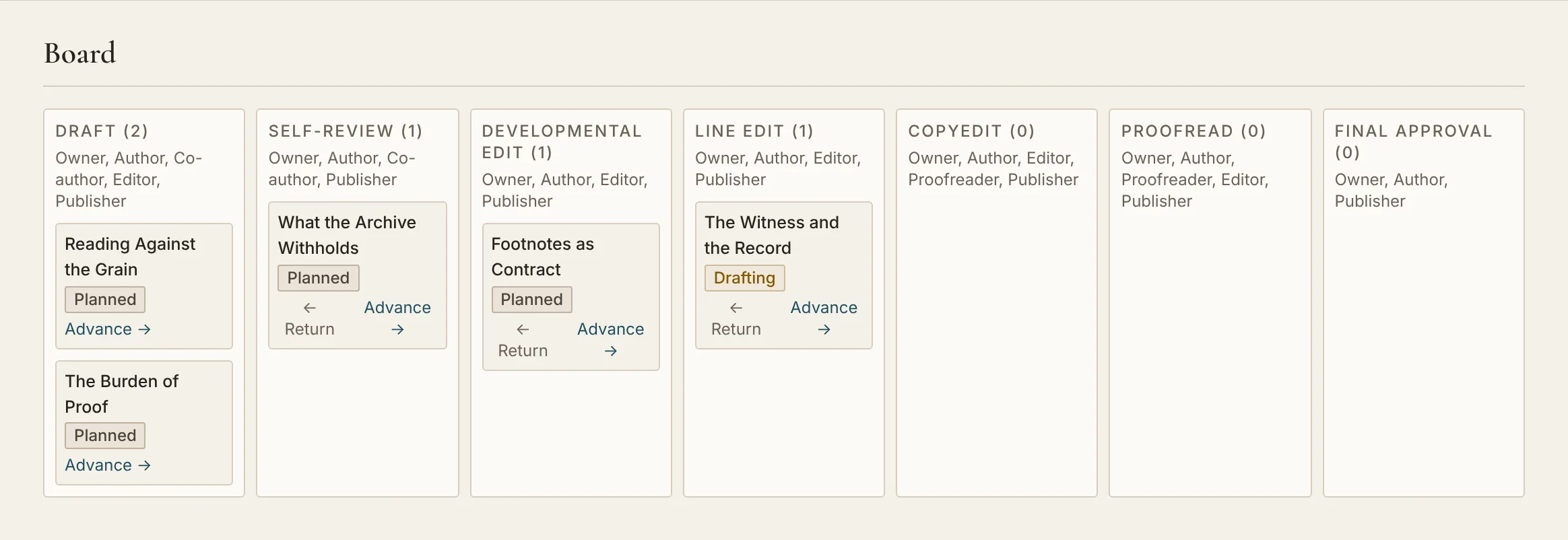
Plate III. Editorial workflow. Chapters on the editorial board, with the roles allowed to move them at each stage.
Twenty-five ways to set a page.
Each is a complete typographic system — typefaces, margins, chapter openings, running heads and folios. Choose one, then adjust it until it is yours.
- Academic Monograph
- University Press
- Theology and Scripture
- Devotional & Reflective
- Historical
- Modern Nonfiction
- Classic Literary
- Minimalist Contemporary
- Biography and Memoir
- Business and Leadership
- Professional Handbook
- Textbook and Educational
- Study and Workbook
- European Edition (A5)
- Institutional Report (A4)
- Pocket Edition
- Large Print
- Premium Hardcover
- Reference and Encyclopedia
- Poetry
- Technical and Engineering
- Illustrated Book
- Essay Collection
- Children's Book
- Submission Manuscript
See the book before it exists.
The live preview typesets the manuscript in your browser with the same engine and stylesheet as the PDF export, as single pages or facing spreads. Change the design, trim, typeface, size or leading and the pages re-flow.
When it is ready: print-ready PDF, EPUB and DOCX, an index from your marked terms, and a cover built to the printer’s sheet, with the spine width taken from the page count.
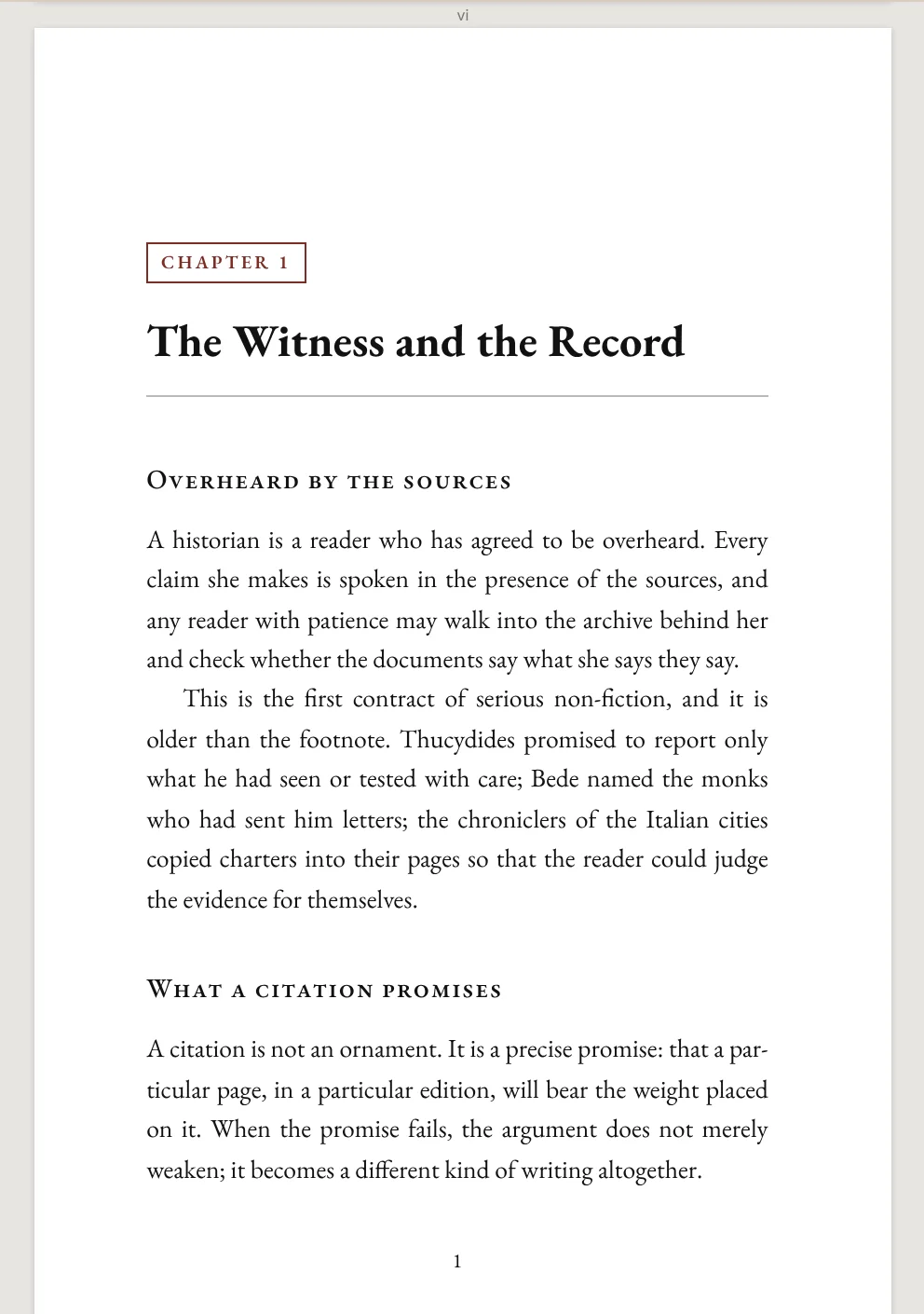
Plate IV. Live typeset preview. The sample book’s first chapter, as the preview sets it.
The proof sheet.
Before any file leaves, it is examined, and the examination comes with it.
Accessible PDF
Tagged structure, described links, page furniture marked as such; validated against PDF/UA-1 by veraPDF.
EPUB 3
Checked by EPUBCheck, and by DAISY Ace for reading-system accessibility.
Type
Every font embedded and subset; true small capitals where the face provides them.
Trim & bleed
The finished page size measured against the trim you chose, bleed included.
Images
Resolution measured at printed size; anything under 300 ppi is named, page by page.
Cover
Spine width from page count and paper, CMYK output, and an ISBN barcode with its price add-on.
The validators run where they are installed — the standard GuruBooks server image includes every one. Where a tool is missing, its check is reported as not run, never as passed.
Write the book only you can write.
Begin with a single book. Your sources and manuscripts stay private to your workspace, and the book is always yours to take with you — as DOCX, Markdown, EPUB or PDF.